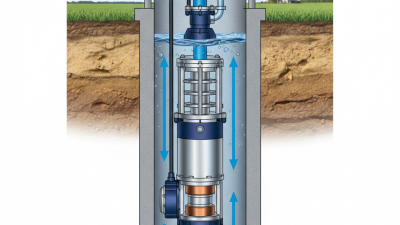

Our Blog
Check out our innovative pump solutions and industry insights to see what's new in the pumping industry. Stay up to date with the latest trends and news in the world of pumping technology by following our pumping technology blog.
- Home
- Blog
What Is a Deep Well Submersible Pump?
A deep well submersible pump works below the water surface, pushing groundwater upward through a rising pipe. Its motor stays submerged, reducing suction limitations and protecting performance in deep boreholes. The design sounds simple. The engineering is not.
UNESCO’s United Nations World Water Development Report 2022 states that groundwater supplies nearly half of global drinking water. It also supports about 25% of total water withdrawals and roughly half of irrigated agriculture. These figures explain why pump selection deserves more than a catalogue comparison. Well depth, static water level, drawdown, flow demand, sand content, cable sizing, and motor cooling all influence real performance. A pump that delivers 10 cubic metres per hour on paper may perform poorly when the water level falls or the discharge pipe narrows.
Dr. John Cherry, a leading groundwater scientist and 2020 Stockholm Water Prize laureate, has warned, “Groundwater is hidden, but it is not infinite.” That principle should guide every deep well submersible pump decision. Energy efficiency matters, yet reliability matters more when a failed pump stops a village supply, greenhouse, or livestock system. The U.S. Geological Survey also emphasizes that groundwater levels respond to pumping, recharge, climate, and local geology. In practice, this means no universal pump specification exists. That assumption is convenient, but incomplete. A careful assessment begins with measurements, not marketing claims.
Definition and Basic Purpose of a Deep Well Submersible Pump
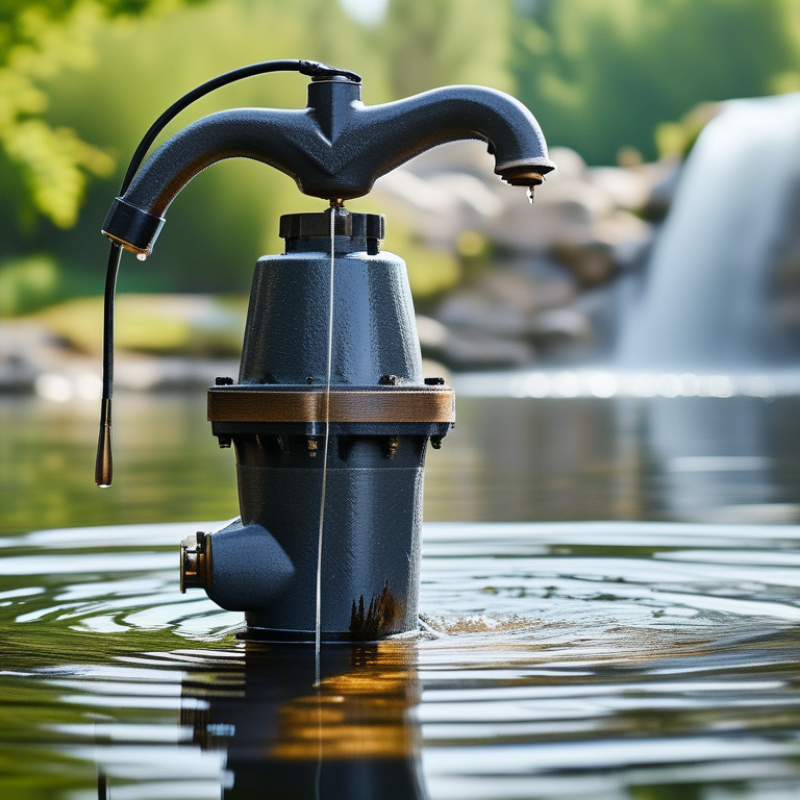
A deep well submersible pump is an electric pump installed below the water level inside a borehole. Its basic purpose is simple: lift groundwater to the surface for drinking water, irrigation, livestock, or household use. Unlike a surface pump, it pushes water upward through a delivery pipe. The motor and pump stay submerged, reducing priming problems and surface noise.
It is not a magic solution. The borehole must provide enough water, and the pump must match its depth, flow rate, and pressure requirements.
The U.S. Geological Survey reported about 82.3 billion gallons of groundwater withdrawals per day in its 2015 national assessment, showing the scale of groundwater dependence. The WHO and UNICEF Joint Monitoring Programme also reported that 2.2 billion people lacked safely managed drinking water in 2022.
Reliable pumping matters, but reliability begins with correct design. A technician should measure static water level, pumping water level, well yield, pipe friction, and required pressure.
A pump that is too large may cycle excessively or empty the well. A weak pump may deliver only a thin stream at the outlet. Small errors become expensive underground.
Field measurements are often better than assumptions, although even measured conditions can change during drought.
Main Components and How the Pump Operates Underwater
What Is a Deep Well Submersible Pump?
A deep well submersible pump is installed below the water level inside a narrow well. Its main parts include a sealed electric motor, impellers, diffusers, an intake screen, and a discharge connection. A power cable supplies electricity through a waterproof cable entry. The motor housing must resist pressure and keep water away from electrical parts. Small sealing faults can cause serious failure.
The pump operates underwater rather than pulling water from the surface. When energized, the motor turns the impeller stack. Each impeller increases water pressure, while each diffuser redirects water toward the next stage. Water enters through the intake screen and travels upward through the rising pipe. A check valve helps prevent water from flowing backward when the motor stops. The well casing supports the assembly, but it does not replace correct pump sizing.
In practical installations, technicians check flow demand, well depth, pipe friction, and available voltage before selecting the pump. Sediment is a common problem. It can wear impellers and restrict the intake screen. The motor also depends on surrounding water for cooling, so running it dry can quickly damage internal parts. Grounding, insulation testing, and a suitable control device are essential. One assumption deserves caution: a stronger pump is not always better. Excessive flow may lower the water level, draw in sand, or overload the well. Field conditions can change, so measurements should be repeated instead of trusted blindly.
| Category | Main Component or Step | Primary Function | How It Operates Underwater | Typical Technical Information |
|---|---|---|---|---|
| Pump Type | Deep well submersible pump | Moves groundwater from a deep borehole to the surface | The complete pump-and-motor assembly is installed below the water level and pushes water upward through a discharge pipe. | Commonly used in residential, agricultural, municipal, and industrial water wells. |
| Power Unit | Hermetically sealed submersible motor | Converts electrical energy into rotary mechanical energy | The motor is sealed against well water and is cooled by water flowing around the motor housing. | Typical supply options include single-phase or three-phase power, depending on motor size and installation requirements. |
| Hydraulic Section | Impellers | Add velocity and pressure to the water | Each rotating impeller transfers energy to the water. Multiple impellers are arranged in stages to produce greater pressure. | A multistage pump can use several to dozens of stages, depending on the required head and flow. |
| Hydraulic Section | Diffusers or stage bowls | Convert water velocity into usable pressure | After water leaves an impeller, the diffuser slows and redirects it toward the next stage. | The pressure produced by each stage is added to the pressure from the preceding stages. |
| Water Entry | Inlet screen or suction opening | Allows groundwater to enter the pump while limiting large particles | Water enters through the screened intake before reaching the first impeller. | The pump should remain fully submerged during operation to maintain cooling and prevent dry running. |
| Flow Control | Check valve | Prevents water from flowing backward when the motor stops | The valve closes when discharge pressure falls, helping reduce reverse rotation and water hammer. | A check valve may be integrated into the pump or installed in the riser pipe, subject to system design. |
| Mechanical Drive | Pump shaft and couplings | Transmit motor torque to the impeller stack | The shaft rotates inside the pump assembly while bearings maintain alignment and limit vibration. | Shaft materials are selected for strength, corrosion resistance, and compatibility with the pumped water. |
| Discharge | Riser or drop pipe | Carries pressurized water to the wellhead | Water exits the pump outlet and travels upward through the pipe to a pressure tank, storage tank, or distribution system. | Pipe diameter is selected according to flow rate, total head, friction loss, and installation depth. |
| Electrical Supply | Submersible power cable | Supplies electricity to the underwater motor | The cable is secured along the riser pipe and protected from abrasion, moisture, and excessive bending. | Cable size depends on motor current, voltage, conductor length, allowable voltage drop, and installation conditions. |
| Control and Protection | Control box, starter, or variable-speed drive | Starts, stops, and protects the motor | Surface-mounted controls respond to pressure switches, level sensors, or system demand. | Protection may include overload, phase-loss, under-voltage, surge, and dry-run safeguards. |
| Operating Step 1 | Motor starts | Begins rotating the pump shaft | A control signal energizes the motor after the system detects a demand for water. | The starting method should match the motor rating and the available electrical supply. |
| Operating Step 2 | Water enters the first stage | Feeds the impeller assembly | Water pressure at the well allows groundwater to enter through the intake while the impeller creates flow. | The intake must remain clear of sediment and positioned to avoid drawing air or excessive debris. |
| Operating Step 3 | Pressure builds through stages | Raises water to the required elevation | Each impeller and diffuser combination adds energy until the water reaches the pump discharge. | Required pump head includes elevation difference, operating pressure, and pipe friction losses. |
| Operating Step 4 | Water is delivered | Supplies the connected water system | Pressurized water travels through the riser pipe and passes through the wellhead into the distribution system. | Flow rate varies with pump design, well yield, total dynamic head, and system demand. |
| Operating Step 5 | Motor stops and the valve closes | Ends pumping and helps protect the system | When the pressure or level set point is reached, the motor stops and the check valve limits reverse flow. | Correct sizing and gradual control help reduce cycling, pressure surges, and mechanical stress. |
Types of Deep Well Submersible Pumps and Their Applications
What Is a Deep Well Submersible Pump?
Types of Deep Well Submersible Pumps and Their Applications
A deep well submersible pump operates below the water surface. Its motor drives impellers that push water upward through a rising pipe. Unlike surface pumps, it does not need to lift water by suction. This design reduces priming problems and usually operates more quietly. It suits wells with deep static water levels, narrow casings, or limited surface space.
Multistage centrifugal pumps are the most common type for deep wells. Several impellers create higher pressure for domestic water systems, livestock tanks, and small buildings. High-head models support steep delivery lines or elevated storage tanks. Low-yield well systems may use smaller pumps with pressure tanks. Oversized pumps can empty a well too quickly. That mistake is common.
Solar-powered submersible pumps serve remote farms, gardens, and emergency water points. They work well when grid power is unavailable, but output changes with sunlight. Stainless steel models are useful where water contains minerals or mild corrosive elements. Pumps designed for sandy wells need suitable wear-resistant components. In practice, sand levels can be underestimated. A basic water test helps.
Selection should consider well diameter, pumping depth, dynamic water level, required flow, and total head. Installers should also check cable length, voltage, pipe friction, and dry-run protection. A pump that fits the well may still perform poorly if these details are ignored. Seasonal testing is wise, especially before irrigation begins.
Key Factors for Selecting the Right Deep Well Pump
What Is a Deep Well Submersible Pump?
A deep well submersible pump operates below the water surface inside a drilled well. Its sealed motor drives impellers that push water upward through a delivery pipe. Because the pump works underwater, it avoids the suction limits and priming problems of many surface pumps. It must, however, match the well’s conditions closely.
Key Factors for Selecting the Right Deep Well Pump
Start with the required flow rate and total head. Flow describes how much water the pump delivers, while head includes lifting height, pressure needs, and pipe friction. Measure the static and pumping water levels, not just the well depth. A 100-meter well does not always need 100 meters of operating head.
Check the well diameter before choosing the pump body. Leave enough clearance for installation and cooling. Motor power should support demand without frequent overloads. Oversizing can cause waste, pressure problems, and rapid cycling. Undersizing may produce weak flow. Neither is ideal.
Water quality also matters. Sand, iron, and sediment can damage impellers or clog components. Select suitable construction materials and consider a sediment-control plan. Include dry-run protection, overload protection, and a correctly sized cable. These details are easy to overlook.
In field assessments, calculations can seem precise, yet water levels may change seasonally. I would not rely on a single test. Record pressure, flow, and running current after installation. Recheck them later. A slightly conservative design is often safer, though it may cost more initially. Clear maintenance access and compliance with local electrical standards should remain part of the selection process.
Installation, Maintenance, and Common Operating Issues
What Is a Deep Well Submersible Pump?
A deep well submersible pump sits below the water level and pushes water to the surface. Its sealed motor operates underwater, reducing noise and improving lifting efficiency. Installation begins with a measured well depth, static water level, and recovery rate. Pump capacity must match the well’s yield and household demand. An oversized pump can lower the water level too quickly. That may cause dry running.
Use approved drop pipe, properly sized electrical cable, grounding, and a secure safety rope. A torque-control device can reduce movement inside the casing. Keep electrical connections above the waterline and protect them with suitable waterproof components. Local electrical codes and professional inspection remain important. A small installation shortcut can create a serious failure.
Maintenance should include checking pressure, flow, current draw, and unusual cycling. Inspect sediment levels and test water quality when performance changes. A clogged screen may reduce flow, while a damaged check valve can cause pressure loss. Common operating issues include voltage drop, air locking, sand damage, and frequent starts. Do not keep resetting a tripped breaker. Find the cause. One lesson from field troubleshooting is easy to miss: low pressure does not always mean a weak pump. A leaking pipe, poor tank setting, or falling groundwater level may be responsible. I would also recheck the original pump calculation, because early estimates are sometimes too optimistic.
Related Posts
-
What is a submersible well pump and how does it work?
-
Top 10 Best Submersible Well Pumps You Should Consider?
-
Why Choose Submersible Motors for Your Industrial Needs?
-
How to Choose the Best Small Submersible Pump for Your Needs?
-
The Ultimate Guide to Choosing the Right Deep Well Water Pump for Your Needs
-
Top 10 Deep Well Water Pumps for Efficient Water Extraction?