Top Deep Well Pump Options for Efficient Water Extraction?
Efficient water extraction is vital for agriculture and industry. Among the most effective tools for this task are deep well pumps. According to a recent industry report by the Water Systems Institute, nearly 40% of the world's drinking water comes from groundwater sources. Deep well pumps play a crucial role in accessing these resources.
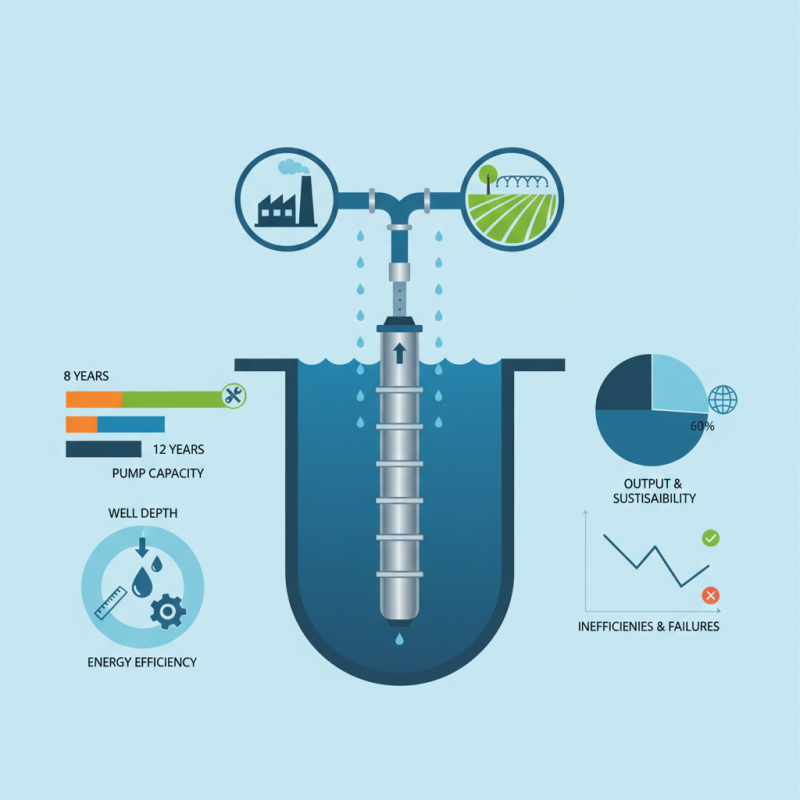
Selecting the right deep well pump can be challenging. Many factors need consideration, such as well depth, pump capacity, and energy efficiency. A study by the National Groundwater Association revealed that the average lifespan of a deep well pump is between 8 to 15 years. However, maintenance practices significantly impact longevity and performance.
Despite technological advancements, issues remain. Some users report inefficiencies or unexpected failures, emphasizing the need for reflective decision-making. Choosing a high-quality deep well pump is critical. The right choice can lead to substantial improvements in output and sustainability. Without careful assessment, users may find themselves with pumps that do not meet their needs.
Overview of Deep Well Pumps and Their Importance in Water Extraction
Deep well pumps play a crucial role in extracting water from significant depths. These pumps are essential for agricultural, industrial, and residential uses. Their design allows them to reach groundwater that is otherwise inaccessible. In many regions, water scarcity has made deep well pumps indispensable.
Choosing the right deep well pump can be challenging. Factors like depth, flow rate, and energy efficiency come into play. Some may overlook the importance of maintenance. Regular checks can prevent costly repairs. A pump that runs efficiently today may not maintain that performance without proper care.
These pumps are not one-size-fits-all solutions. Each application requires a tailored approach. Understanding your specific needs is vital. A misstep might lead to inadequate water supply or waste. Knowing the limitations and requirements can lead to a better choice and long-term satisfaction.
Types of Deep Well Pumps: Submersible vs. Jet Pumps
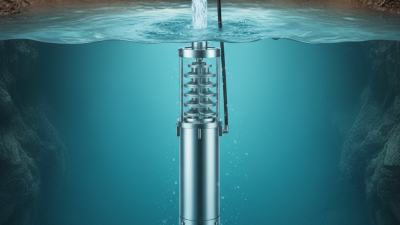
When considering deep well pumps, two popular types emerge: submersible and jet pumps. Submersible pumps are submerged in the water source. They work by pushing water to the surface through a piping system. This design allows for efficient operation, especially in deeper wells. Their compact size means they can fit into tight spaces. However, maintenance can be challenging. If the pump fails, it requires pulling it out of the well for repairs.
Jet pumps, on the other hand, sit above ground and draw water using suction. They are often less expensive and easier to install than submersible pumps. These pumps work best for shallower wells. However, their efficiency drops off as the depth increases. Jet pumps are also more prone to air lock issues, which can hinder performance. Users should be aware of these considerations when choosing between the two types.
Considering their specific needs is crucial. Whether one chooses a submersible or jet pump, each option has distinct advantages and disadvantages. The selection often depends on well depth, water demand, and maintenance capabilities. It's important to weigh these factors before making a decision.
Top Deep Well Pump Options for Efficient Water Extraction
This bar chart illustrates the average efficiency of the two main types of deep well pumps: Submersible pumps and Jet pumps. Submersible pumps are generally more efficient, with an average efficiency of 85%, compared to Jet pumps, which have an average efficiency of 75%.
Key Features to Consider for Efficient Water Extraction
When selecting a deep well pump, several key features can greatly enhance efficiency. Look for pumps with high flow rates to ensure quick water extraction. A pump's material matters too; stainless steel offers durability in challenging conditions. Consider the pump's depth rating. Not all pumps perform well at greater depths. Ensure the pump you choose can handle the specific depth of your well.
Tips: Check the energy consumption levels. Energy-efficient models save money over time. Additionally, examine maintenance requirements. Some pumps require frequent servicing, which can be inconvenient.
Reliability is another important aspect. A reliable pump should perform consistently under various water conditions. Test the pump in different scenarios to see how it reacts. This will help avoid future issues.
Tips: Don't ignore user feedback. Real-world experiences reveal potential weaknesses. Everyone's needs differ, so adaptability is crucial when evaluating your options. Always contemplate the specific requirements of your water source.
Top Deep Well Pump Options for Efficient Water Extraction
| Pump Model |
Maximum Depth (ft) |
Flow Rate (GPM) |
Power Source |
Efficiency Rating |
| Model A |
300 |
45 |
Electric |
85% |
| Model B |
400 |
60 |
Diesel |
90% |
| Model C |
450 |
50 |
Gas |
78% |
| Model D |
350 |
40 |
Solar |
88% |
| Model E |
500 |
70 |
Electric |
95% |
Maintenance Tips for Optimal Performance of Deep Well Pumps
Deep well pumps require regular maintenance to ensure they function efficiently. Regular inspections help identify potential issues before they worsen. Check the pump's pressure gauge often. Low pressure can indicate wear or blockage. Clean filters every few months to avoid build-up and clogs.
Lubrication is crucial for moving parts. Use appropriate grease to keep everything running smoothly. It’s easy to overlook, but a little care goes a long way. Monitor the electrical connections too. Bad wiring can lead to system failures. Always keep an eye on the power supply to prevent unexpected outages.
Sometimes, users forget to maintain their wells. Over time, sediment can accumulate. This impacts water quality and pump efficiency. Routine flushing of the well helps maintain water clarity. Be proactive, not reactive. Small issues can turn into expensive repairs. Regular maintenance keeps your deep well pump operating efficiently.