
Our Blog
Check out our innovative pump solutions and industry insights to see what's new in the pumping industry. Stay up to date with the latest trends and news in the world of pumping technology by following our pumping technology blog.
- Home
- Blog
China Top 10 Types of Borehole Pumps for Global Buyers
China has become a major source of borehole pumps for agricultural, municipal, industrial, and residential water systems. Its manufacturers offer many configurations, from compact submersible units to high-head pumps for deep wells. However, product names can be confusing. Similar models may differ greatly in impeller design, motor cooling, materials, cable quality, and control requirements.
This guide introduces ten common types of borehole pumps available from Chinese suppliers. It considers working depth, flow rate, total head, borehole diameter, power supply, water quality, and installation conditions. These details matter in real projects. A pump working in a narrow 100-metre well faces different demands from one supplying a farm storage tank. Stainless steel housings may resist corrosion better. Sand-tolerant designs can help in newly drilled wells. Yet no pump suits every site.
Practical experience shows that selection errors often begin with incomplete well data. Measure the static water level. Check the pumping level. Test the water. Confirm the required delivery pressure. Supplier certifications, factory testing, spare-parts support, and warranty terms also deserve careful review. Reliable manufacturers should provide performance curves, motor information, installation guidance, and traceable technical documents. This article aims to help global buyers compare China’s top ten borehole pumps more clearly, while recognizing that advertised performance may change under field conditions. Small differences matter. Independent verification remains wise.
Borehole Pump Basics: Design, Function, and Common Applications
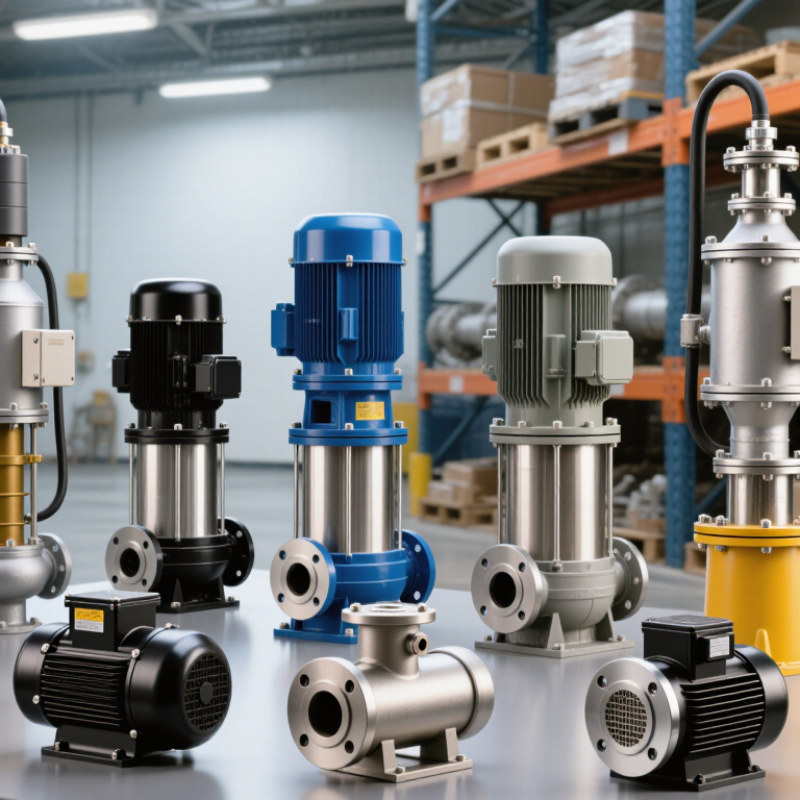
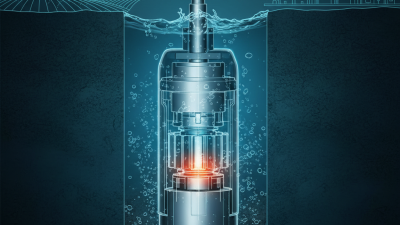
Borehole pumps move groundwater through narrow, deep wells where surface pumps cannot create enough suction. Their basic design combines a submersible motor, impellers, diffusers, an intake screen, cable, and rising pipe. The motor sits below the water line. This arrangement reduces suction loss and pushes water upward through the delivery pipe. Impellers add velocity, while diffusers convert much of it into pressure. Clearances are small. Sand can still damage them.
A technician selects pump diameter, flow rate, total dynamic head, power supply, and water quality together. Static water level and seasonal drawdown matter. So does the well’s inside diameter. A pump that is too large may overdraw the aquifer, overheat, or cycle frequently. A small pump may run safely but fail to meet household or irrigation demand. In practice, measurements are sometimes incomplete. That uncertainty deserves a conservative design review. Cable sizing, non-return valves, cooling flow, and dry-run protection also affect reliability.
Common applications include rural drinking-water systems, livestock troughs, crop irrigation, construction dewatering, and groundwater monitoring. For potable use, wetted materials should suit local water requirements and installation rules. Irrigation systems often need steady pressure across long pipe runs. Monitoring wells may require low-flow equipment and careful sampling access. Field testing should check voltage, discharge, vibration, and sand content after installation. Results can expose a mismatch between the catalog estimate and the actual well. That lesson is easy to miss.
China’s 10 Main Borehole Pump Types by Operating Principle
China Top 10 Types of Borehole Pumps for Global Buyers
China’s borehole pump market covers ten operating principles, not one universal design. Submersible centrifugal pumps use rotating impellers to raise water through narrow wells. Vertical turbine pumps use staged impellers and a long shaft. Axial-flow pumps move large volumes with low head, while mixed-flow pumps balance flow and pressure. Jet pumps create suction through a nozzle and venturi system. Their practical depth is limited.
Airlift pumps use compressed air to reduce water density inside the rising pipe. They tolerate some sand but consume considerable energy. Piston pumps lift water through reciprocating chambers and check valves. Diaphragm pumps use a flexible membrane, making them suitable for controlled, low-flow delivery. Progressive cavity pumps use a rotating rotor inside an elastic stator. They handle viscous water better, though stator wear deserves attention. Screw pumps move water through helical cavities with steady flow and moderate pressure.
The tenth type is the regenerative turbine pump, which repeatedly circulates water around its impeller for higher pressure from a compact body. Bore diameter, static water level, yield, sand content, and available power should guide selection. Field testing matters. A catalog rating alone can mislead. The categories also overlap, and some designs are uncommon in deep boreholes. That is worth checking before procurement.
| No. | Borehole Pump Type | Operating Principle | Typical Flow Range | Typical Head Range | Common Borehole Size | Main Applications | Key Advantages | Main Limitations |
|---|---|---|---|---|---|---|---|---|
| 1 | Radial-Flow Submersible Centrifugal Pump | A rotating impeller converts motor energy into centrifugal pressure, directing water radially through the diffuser. | 0.5–100 m³/h | 20–600 m | 100–250 mm | Domestic water supply Irrigation Industrial water | High pressure capability, compact construction, widely available hydraulic configurations, and good efficiency at designed duty points. | Performance decreases with sand and abrasive solids; correct sizing is essential to avoid overheating and excessive cycling. |
| 2 | Mixed-Flow Submersible Pump | The impeller produces both radial and axial water movement, combining moderate pressure with relatively high flow. | 30–1,500 m³/h | 8–120 m | 200–500 mm | Municipal supply Large-scale irrigation Raw-water intake | Handles large volumes efficiently and is suitable where the required head is moderate. | Requires a larger borehole and is generally unsuitable for very high-head applications. |
| 3 | Axial-Flow Submersible Pump | A propeller-type impeller lifts water mainly parallel to the pump shaft, producing high flow at low pressure. | 100–10,000 m³/h | 2–30 m | 300 mm and above | Drainage Flood control Low-lift irrigation | Very high flow capacity and efficient operation at low heads. | Not appropriate for deep high-pressure boreholes; requires a large installation diameter and carefully controlled operating conditions. |
| 4 | Multistage Submersible Centrifugal Pump | Several impellers and diffusers are arranged in series; each stage adds pressure to achieve a high total head. | 0.3–200 m³/h | 50–1,000 m | 75–250 mm | Deep wells Pressure boosting Water treatment feed | Excellent for deep lifting, narrow boreholes, and high-pressure water delivery. | More sensitive to abrasive sand, dry running, and incorrect motor selection; maintenance can be more involved. |
| 5 | Vortex or Recessed-Impeller Submersible Pump | A recessed impeller creates a rotating vortex that transports water with limited direct contact between solids and the impeller. | 1–80 m³/h | 5–80 m | 100–250 mm | Dirty water Drainage Lightly contaminated groundwater | Better solids-handling capability and reduced clogging risk compared with close-clearance centrifugal designs. | Usually provides lower efficiency and lower pressure than a comparable clean-water multistage pump. |
| 6 | Peripheral or Regenerative-Turbine Pump | A bladed impeller circulates water repeatedly around a peripheral channel, generating relatively high pressure from a small pump. | 0.1–15 m³/h | 20–180 m | 75–150 mm | Small-diameter wells Domestic supply Pressure systems | Compact size, good pressure at low flow, and suitability for small water-demand systems. | Low tolerance for sand and solids; efficiency is generally lower than that of centrifugal pumps at larger flows. |
| 7 | Progressive-Cavity Submersible Pump | A helical rotor turns inside an elastomeric stator, moving fluid through sealed cavities at a nearly constant rate. | 0.1–60 m³/h | 10–250 m | 100–250 mm | Viscous liquids Sandy water Dosing applications | Produces steady, low-pulsation flow and can handle certain fluids that are difficult for centrifugal pumps. | The stator can be damaged by dry running, high temperature, incompatible chemicals, or excessive rotational speed. |
| 8 | Pneumatic Airlift Pump | Compressed air injected into the riser reduces the average fluid density, causing the water-air mixture to rise. | 0.5–100 m³/h | 10–150 m | 150 mm and above | Unreliable power sites Sandy wells Well development | Has few submerged moving parts and can tolerate abrasive water and certain solids. | Requires a compressor, usually has lower energy efficiency, and needs sufficient submergence for effective operation. |
| 9 | Jet-Ejector Borehole Pump | A surface pump sends pressurized water through a nozzle; the resulting high-velocity jet entrains well water and lifts it through the suction line. | 0.5–15 m³/h | 10–60 m | 100–200 mm | Shallow to medium wells Small farms Residential supply | The motor and pump remain accessible above ground, simplifying inspection and maintenance. | Lower efficiency than submersible centrifugal systems and limited practical suction depth; requires priming and suitable pipework. |
| 10 | Submersible Diaphragm Pump | An electrically or mechanically actuated diaphragm reciprocates to create suction and discharge strokes, often through check valves. | 0.05–10 m³/h | 5–100 m | 75–150 mm | Low-yield wells Sampling Remote water supply | Suitable for low-flow wells, intermittent operation, and applications requiring simple positive-displacement pumping. | Flow is pulsating, capacity is limited, and diaphragms and valves are wear components requiring periodic replacement. |
Comparing Pump Types by Depth, Flow Rate, Head, and Power
China Top 10 Types of Borehole Pumps for Global Buyers
Borehole pump selection starts with measured depth, not catalogue habit. The FAO AQUASTAT database indicates groundwater supplies about 40% of irrigated agriculture worldwide. That demand rewards careful sizing. The ten common choices include submersible, jet, centrifugal, deep-well turbine, axial-flow, mixed-flow, piston, diaphragm, progressive-cavity, and airlift pumps. Submersible centrifugal pumps usually suit 30–300 metres, delivering roughly 2–150 m³/h at 30–250 metres of head. Jet pumps fit shallower wells, often below 30 metres, but lose efficiency as suction depth increases. Piston and diaphragm designs provide lower flows, commonly 0.1–10 m³/h, with strong pressure control.
Deep-well turbine pumps can serve high-flow sites, sometimes above 300 m³/h, but installation and alignment demand specialist experience. Axial-flow pumps favour high flow and low head. Mixed-flow models occupy the middle ground.
Progressive-cavity pumps handle abrasive or viscous water better, although their power demand may rise. Airlift pumps have few submerged moving parts, yet their air compressor can consume substantial energy.
Solar DC pumps often operate from 0.3–5 kW, while larger electric systems may require 5–75 kW. The U.S. Department of Energy notes that pump efficiency and system design strongly affect lifecycle energy use. Small errors become expensive.
Tips: Record static water level, drawdown, pipe length, and target flow during a pumping test. Convert head accurately; every 10 metres of water head adds about 0.98 bar. Check motor power against efficiency, not only rated output. These ranges are practical guides, not guarantees. Water quality, cable loss, and seasonal decline can change the result.
How Global Buyers Can Select the Right Chinese Borehole Pump
China Top 10 Types of Borehole Pumps for Global Buyers
Selecting the right Chinese borehole pump starts with the well, not the catalogue. Common options include submersible multistage, solar DC, AC, high-head, low-head, stainless-steel, cast-iron, screw, mixed-flow, and drainage models. Match the pump curve with measured flow, static water level, dynamic water level, and total head. FAO AQUASTAT reports that agriculture uses about 70% of global freshwater withdrawals. Efficiency matters, especially for irrigation projects with long daily operating hours. UN-Water’s 2024 report also states that 2.2 billion people lacked safely managed drinking water in 2022. Reliable pumping is not a luxury.
FAO AQUASTAT reports that agriculture uses about 70% of global freshwater withdrawals.
Ask the supplier for performance curves at your operating voltage and frequency. Request test records, material certificates, motor protection details, and spare-parts availability. ISO 9906 provides internationally recognized procedures for testing rotodynamic pump performance. Check whether the quoted flow was tested with clean water. Borehole water may contain sand, iron, or fine gravel. A cheaper pump can fail quickly under those conditions. I have seen specifications that looked excellent but ignored cable length and voltage drop. That mistake is easy to repeat.
Tips: Measure well diameter carefully. Leave installation clearance. Compare hydraulic efficiency, not only purchase price. Confirm IP protection, thermal protection, starting current, and local service support. Ask for a trial unit when the site data is uncertain. The specification is rarely perfect. Field conditions deserve a second look.
Quality Standards, Installation Needs, and Maintenance Considerations
Choosing among borehole pump types requires more than comparing flow rates. Quality starts with documented factory testing, electrical insulation checks, corrosion-resistant materials, and traceable performance data. For drinking-water projects, confirm local certification and material safety requirements. A pump may pass a factory test yet struggle in a sandy borehole. That possibility deserves attention.
Installation must match the site, not just the catalogue. Measure bore diameter, static water level, seasonal drawdown, and required head before selecting submersible, solar, hand, or surface-assisted equipment. Use a correctly sized cable, secure lifting rope, and a check valve where required. Keep electrical joints sealed above the waterline. Small mistakes become expensive underwater.
Tips: Record the pump’s voltage, current, pressure, and flow during commissioning. Inspect unusual vibration, cloudy water, and frequent cycling early. Clean intake screens when sediment rises. Do not guess the water level. A simple logbook helps.
Maintenance should follow operating hours and water conditions. Test insulation and earth protection with qualified personnel. Check pressure changes against the original readings. Excessive current may indicate blockage, worn bearings, falling water levels, or incorrect voltage. Replacement decisions should consider repair access and spare-part availability. Field experience shows that maintenance plans often fail because they are too general. A realistic schedule must reflect the borehole’s sand load, running hours, and seasonal behavior.
Related Posts
-
Top 10 Borehole Pumps Buyers Should Consider Today?
-
How to Choose the Best Borehole Pumps for Your Needs?
-

How to Choose the Right Bore Pump for Your Needs?
-
Understanding the Benefits of Using a 1 Hp Well Pump for Efficient Water Supply
-
What is a Submersible Motor and Its Applications?
-

Top 10 1hp Water Pumps for Global Buyers in 2026