

Our Blog
Check out our innovative pump solutions and industry insights to see what's new in the pumping industry. Stay up to date with the latest trends and news in the world of pumping technology by following our pumping technology blog.
- Home
- Blog
How to Choose the Best Spunlace Machine for Your Factory
Choosing the best Spunlace Machine begins with your factory’s actual production needs, not a supplier’s impressive brochure. A line designed for 40–80 gsm wipes may perform poorly with heavier medical fabrics. Fiber type matters too. Viscose, polyester, cotton, and blended fibers can require different water pressures, web-forming settings, and drying capacity. Small details matter.
During equipment evaluation, measure your target output, fabric width, basis weight, moisture level, and available floor space. A machine running at high speed may appear attractive, but unstable web formation can create uneven edges, weak areas, and costly waste. Ask suppliers for test reports using your fibers. Request samples from both the beginning and end of a trial run. One good sample proves very little.
Reliable decisions also depend on practical factory experience. Check pump access, filter replacement time, nozzle cleaning procedures, and operator training requirements. Review energy consumption, wastewater handling, spare-part availability, and response times from the technical team. A lower purchase price may become expensive when maintenance support is slow. I have seen projects focus heavily on speed while overlooking drying capacity and installation limits. That mistake is easy to repeat.
There is no universal best machine. Your ideal choice should balance product quality, production volume, labor skills, energy use, and future expansion. Create a comparison sheet with measurable criteria, then visit an operating factory if possible. Listen carefully to operators. Their daily observations may reveal problems that technical specifications never mention. Even a careful selection can require adjustment after installation. That is normal, but preparation reduces the risk.
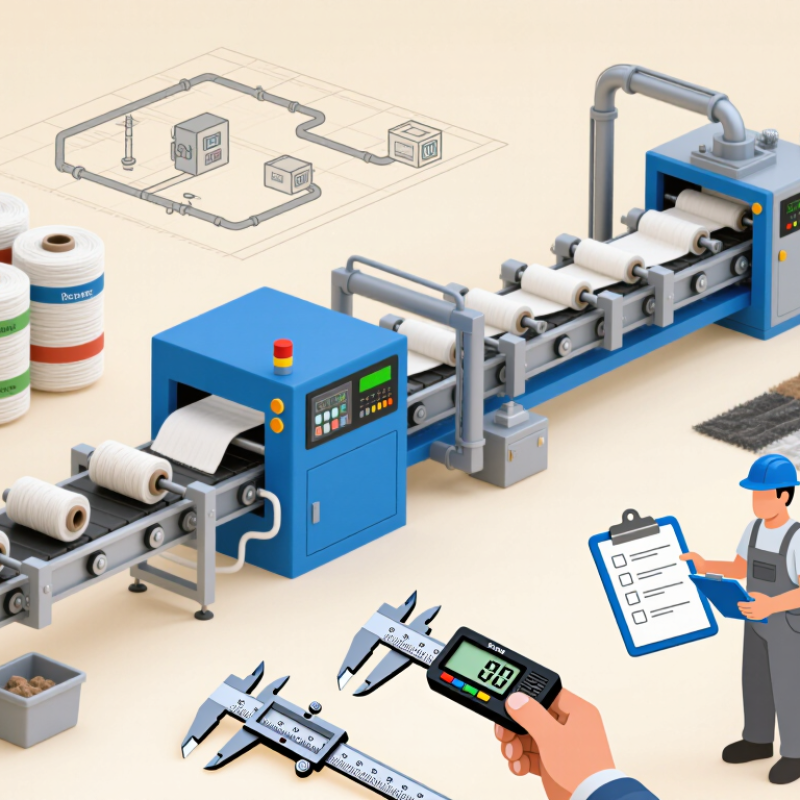
Define Your Factory’s Spunlace Production Requirements
Before choosing a spunlace machine, define what your factory must produce each day. Record the target output in kilograms per hour, finished roll width, fabric weight, and fiber composition. A medical wipe, cleaning cloth, and filtration sheet may require different web structures and bonding settings.
Measure your available space carefully. Include room for fiber preparation, web forming, hydroentanglement, drying, winding, and wastewater treatment. Check power, water pressure, compressed air, and drainage capacity. These details often decide whether a machine performs reliably. Ask for trial data using your actual fibers, such as viscose, polyester, or blended materials. A quoted capacity can change with fabric weight and moisture content.
Tips: Build a simple production model before contacting suppliers. Include shift hours, changeover time, expected waste, and maintenance stops. Use a conservative output figure, not the best laboratory result. A neat spreadsheet can still mislead. Leave space for future upgrades, but avoid paying for features your team cannot operate. Operators should also review access to filters, pumps, nozzles, and drying components. Easy maintenance may protect output more than a higher maximum speed.
Define quality requirements in measurable terms. Specify tensile strength, elongation, absorbency, thickness, cleanliness, and roll hardness. Keep sample records from every trial. This evidence helps your team compare machines fairly and identify weak assumptions before installation.
Compare Spunlace Machine Types and Processing Capabilities
Choosing a spunlace machine starts with the product, not the brochure. INDA’s 2024 Global Nonwoven Markets report recorded more than 14 million metric tons of global nonwoven production in 2023. This scale hides major differences between wipes, medical fabrics, filtration media, and absorbent structures.
A carded-web line suits uniform short fibers and controlled basis weights. An airlaid system handles loose cellulose and bulky webs more effectively. Wetlaid equipment can create finer, more even structures, but it demands careful slurry control. For high-strength fabrics, compare single-sided and double-sided hydroentanglement. Double-sided treatment usually improves fiber bonding through the web thickness. It can also increase water consumption and maintenance requirements.
Check the operating envelope closely. Ask for validated data at your target width, basis weight, and line speed. A machine rated at 150 meters per minute may perform differently at 80 gsm than at 40 gsm. Water pressure, nozzle density, dewatering capacity, and filtration quality directly affect strength and energy use. EDANA market statistics continue to identify hygiene and wipes as major nonwoven applications, yet these products often need different softness and absorbency profiles. Do not assume one line will optimize everything. That assumption can fail. In factory trials, I would test recycled fibers, blend ratios, moisture variation, and startup waste before approving the specification. Smithers’ recent nonwovens forecasts also indicate continued demand for lighter, higher-performance materials, making flexibility more valuable than maximum speed alone.
Evaluate Key Machine Specifications and Fiber Compatibility
Choosing the best spunlace machine starts with fiber compatibility, not advertised speed. A machine must process your actual blend, moisture level, and target basis weight. Viscose and lyocell usually form soft, absorbent webs. Polyester improves strength and drying stability. Cotton can add natural softness, but it may increase lint and filtration demands.
Check the working width, line speed, hydroentanglement pressure, pump capacity, and drying system. Many production lines operate across 30–200 gsm, but the correct range depends on fiber length and web uniformity. The 2024 Global Nonwovens Markets report from EDANA and INDA indicates continued growth in hygiene, medical, and filtration applications. This growth makes stable quality more valuable than maximum speed. A line running at 180 meters per minute is not efficient if it creates uneven bonding or frequent web breaks.
Ask suppliers for trials using your own fibers. Measure tensile strength, elongation, absorbency, thickness, and basis-weight variation. Future Market Insights reports strong long-term growth for spunlace nonwovens, with hygiene and wipes among key demand areas. However, market forecasts cannot predict your factory’s water quality or operator skill. That matters. I would also examine nozzle accessibility, recycled-water filtration, energy consumption, and maintenance records. A polished specification sheet can hide practical weaknesses. My earlier evaluations often focused too heavily on output; that was a mistake. Consistent performance, fiber flexibility, and easy cleaning deserve equal weight.
| Machine Configuration | Typical Web Width | Typical Operating Speed | Typical Production Capacity | Suitable Fiber Types | Recommended Fiber Length | Typical Applications | Selection Fit |
|---|---|---|---|---|---|---|---|
| Compact pilot or small-scale line | 1.6–2.5 m | 30–80 m/min | Approximately 0.5–2.0 tonnes/day, depending on basis weight and line configuration | Viscose, polyester, cotton, wood pulp blends, and other short staple fibers | Typically 25–60 mm for carded web formation | Sampling, product development, specialty wipes, and limited-volume production | Best for testing |
| Standard carded-web spunlace line | 2.5–3.6 m | 80–150 m/min | Approximately 2–6 tonnes/day, depending on basis weight, hydroentanglement energy, and drying efficiency | Viscose, polyester, cotton, lyocell, polypropylene, and blends | Typically 25–60 mm; fiber crimp and fineness must match the carding system | Wet wipes, dry wipes, medical fabrics, hygiene products, and general industrial nonwovens | General-purpose choice |
| High-capacity carded-web line | 3.6–5.0 m | 120–220 m/min | Approximately 5–12 tonnes/day, subject to basis weight, working width, and number of carding machines | Viscose, polyester, cotton, lyocell, polypropylene, and recycled fiber blends | Typically 25–60 mm; consistent staple length is important for high-speed web uniformity | Large-volume wipes, filtration media, medical disposables, automotive fabrics, and hygiene substrates | Best for volume |
| Crosslapper-based heavy-weight line | 2.5–5.0 m | 30–100 m/min | Approximately 2–10 tonnes/day, depending on web weight and layering ratio | Polyester, polypropylene, viscose, cotton, recycled fibers, and durable blends | Typically 40–80 mm; longer fibers can improve web integrity when properly carded | Geotextiles, upholstery, filtration, construction materials, and absorbent structures | Best for heavy fabrics |
| Airlaid and spunlace combination line | 2.0–4.0 m | 30–120 m/min | Approximately 1–8 tonnes/day, depending on pulp content, basis weight, and bonding sequence | Wood pulp, fluff pulp, viscose, lyocell, cotton, polyester, and bicomponent fibers | Airlaid pulp is generally much shorter than staple fibers; staple components are commonly 25–60 mm | Absorbent wipes, cleaning materials, medical pads, and high-absorbency nonwovens | For absorbency |
| Recycled-fiber spunlace line | 2.5–4.0 m | 60–150 m/min | Approximately 2–7 tonnes/day, depending on fiber cleanliness, opening quality, and blend ratio | Recycled cotton, recycled polyester, recycled viscose, and virgin-fiber blends | Often 20–60 mm after recycling; fiber length distribution should be checked before purchase | Wipes, cleaning cloths, shoe materials, automotive interiors, and industrial fabrics | Requires trials |
| Biodegradable-fiber spunlace line | 2.5–4.0 m | 60–150 m/min | Approximately 2–7 tonnes/day, depending on fiber blend and drying requirements | Viscose, lyocell, cotton, PLA, cellulose-based fibers, and biodegradable blends | Typically 25–60 mm for staple fibers; moisture sensitivity and thermal limits must be evaluated | Flushable or dispersible wipes, personal-care products, biodegradable wipes, and packaging materials | Check fiber behavior |
| Continuous-filament spunlace line | 2.5–4.5 m | 80–200 m/min | Approximately 3–10 tonnes/day, depending on filament denier, basis weight, and line width | Continuous polyester, polypropylene, viscose, lyocell, and other suitable filament materials | Not applicable in the staple-fiber sense; filament denier, orientation, and tow opening are critical | High-strength wipes, filtration, medical fabrics, synthetic leather substrates, and technical textiles | For filament products |
Note: The figures shown are typical engineering ranges for industrial spunlace configurations rather than guaranteed output values. Actual performance depends on fiber fineness, fiber length, blend ratio, basis weight, working width, hydroentanglement pressure, drying method, machine uptime, and the required product quality.
Assess Energy Use, Automation, Maintenance, and Safety
Choosing the best spunlace machine requires more than comparing production speed. Energy use can reshape your operating costs over time. Ask suppliers for measured power consumption at different line speeds, not only ideal figures. Check water circulation, pump efficiency, and heat recovery options. A simple energy meter installed during testing can reveal unexpected losses.
Automation should support operators, not confuse them. Look for clear controls, automatic tension adjustment, sensor-based fault alerts, and production data that supervisors can understand quickly. Excessive automation may increase training demands and repair costs. A short trial with your operators is more valuable than a polished demonstration. Their feedback often exposes awkward access points and unclear alarms.
Maintenance details deserve equal attention. Inspect filter locations, nozzle access, lubrication points, and spare-part availability before signing an agreement. A few minutes saved during cleaning can become hours each week. Safety also needs practical review: guarded moving parts, emergency stops, safe electrical cabinets, and clear lockout procedures should be visible and testable. Do not rely only on documents. Walk around the machine while it is running.
No machine is perfectly efficient. A common mistake is choosing maximum output while overlooking unstable quality or difficult cleaning. Record energy, downtime, noise, and operator effort during a realistic trial. Then compare those results with your factory’s staffing, utilities, and maintenance skills. Some decisions will remain uncertain, and that uncertainty should be documented rather than hidden.
Select a Supplier Based on Cost, Support, and Long-Term Value
Choosing the best spunlace machine starts with supplier value, not the lowest quotation. Smithers’ The Future of Global Nonwovens to 2028 estimates global nonwovens value will rise from roughly US$52 billion in 2023 to about US$68 billion in 2028. Demand is expanding, but equipment costs are only one part of factory profitability. A cheaper line may require more water, energy, labor, or downtime.
Compare total ownership costs over five to ten years. Request verified figures for production speed, energy use per kilogram, water recovery, and acceptable basis-weight variation. Ask for a sample trial using your actual fiber blend. Ask for proof. A polished demonstration can hide unstable web formation.
Supplier support deserves equal attention. EDANA’s 2023 European statistics reported approximately 3.1 million tonnes of nonwoven production, showing the scale of competition and the pressure to maintain consistent output. Choose a supplier with local technicians, clear response times, operator training, and documented spare-parts availability. Check references from factories running similar widths and products. Their maintenance records often reveal more than sales presentations.
Long-term value also depends on upgrade options, software access, safety documentation, and commissioning quality. I would leave room for doubt: promised capacity may not match real production after several months. Test the line at conservative settings, measure actual utility consumption, and review the service contract carefully. Support matters. A supplier who answers quickly during a failed pump or clogged filter can protect far more revenue than a small discount at purchase.
How to Choose the Best Spunlace Machine for Your Factory
Select a supplier based on cost, technical support, production reliability, and long-term value. The chart shows a practical procurement scorecard with transparent weighting for comparing machine options without using company or brand data.
A balanced evaluation should consider more than the initial purchase price. Total cost of ownership, output stability, energy and water efficiency, spare-parts availability, commissioning, operator training, and after-sales support all influence the machine’s long-term value.