How to Choose the Best Paper Box Glue Spraying Machine
Choosing the right Paper Box Glue Spraying Machine has become a production decision, not merely an equipment purchase. Packaging lines now face tighter delivery schedules, higher labor costs, and stronger sustainability expectations. Smithers’ report, The Future of Global Packaging to 2028, forecasts continued growth in worldwide packaging demand, especially for efficient and value-added formats. This growth increases pressure on converters to control glue usage, reduce waste, and maintain stable output.
PMMI’s recent automation reports identify labor availability, faster changeovers, and production data as major drivers of packaging automation. These findings matter when comparing glue spraying systems. A suitable machine should provide consistent nozzle performance, adjustable spray width, accurate adhesive control, and simple cleaning access. Operators should also examine belt speed, carton size limits, sensor response, and compatibility with water-based or hot-melt adhesives. Small details matter. A blocked nozzle can leave visible open seams on a carton.
The best specification is not always the most expensive one. That assumption deserves testing. Buyers should request samples using their actual paperboard, folding pattern, and adhesive. They should measure bond strength, spray uniformity, startup time, and adhesive consumption. Reports from Smithers and PMMI offer valuable market direction, but factory conditions remain decisive. A machine that performs well in a brochure may struggle with dusty board or frequent format changes. Careful trials, documented maintenance needs, operator feedback, and supplier service records create a more reliable decision. The final choice should balance productivity, precision, safety, energy use, and long-term operating cost. Some compromises will remain. Good selection makes them visible.
What Is a Paper Box Glue Spraying Machine?
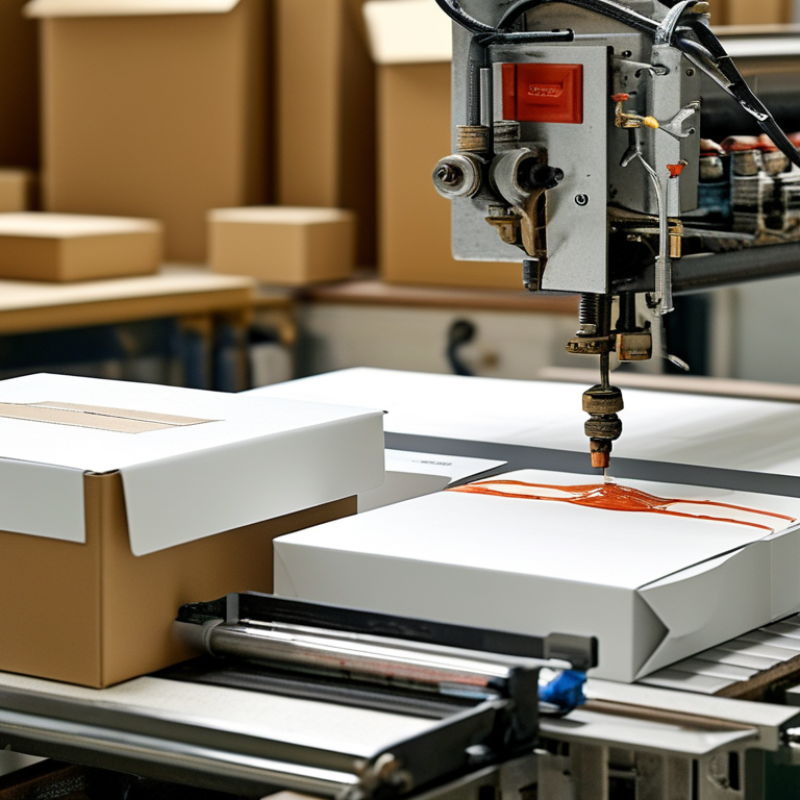
A paper box glue spraying machine is equipment that applies adhesive to carton blanks before folding and pressing. It uses pumps, hoses, nozzles, and sensors to place glue on precise areas. The machine may spray dots, lines, or short patterns. This prevents excess adhesive from staining printed surfaces. It also reduces manual brushing and uneven bonding.
The scale is significant. FAO’s Forestry Production and Trade database recorded more than 400 million tonnes of global paper and paperboard production in 2023. Smithers’ sustainable packaging report valued that market at about 274 billion US dollars in 2023. These figures explain why stable gluing matters on busy packaging lines. A small nozzle error can create hundreds of weak cartons within minutes.
When choosing equipment, check glue viscosity, carton material, line speed, and cleaning access. Water-based adhesive needs different control from hot-melt glue. Ask for test runs with your actual paperboard, not a supplier’s sample. Operators should inspect glue width, bonding strength, and nozzle blockage during production. A faster machine is not always better. In practice, poor maintenance can cancel its rated output. This is the part many specifications fail to show. Allow room for adjustment, because paper quality and workshop humidity can change results.
How to Compare Machine Capacity, Precision, and Speed
How to Choose the Best Paper Box Glue Spraying Machine
Machine capacity should match your real production rhythm, not an attractive catalog number. A machine rated for 6,000 boxes per hour may slow down with thick board, unusual shapes, or frequent adjustments. Measure your actual box size range, daily output, and changeover time. Leave some capacity in reserve. A machine running at its limit often creates unstable feeding and more glue waste.
Precision is easier to judge through results. Check glue-line width, spray position, and repeatability across several test boxes. Ask for samples using your paperboard and adhesive, because clean performance on standard stock proves very little. Operators should inspect nozzle alignment, conveyor tracking, and drying behavior. Small errors can cause open seams or messy edges. I once trusted a specification sheet too quickly. The machine met its stated tolerance, but our folding process needed tighter control.
Speed matters only when precision remains steady. Compare continuous output, acceleration time, and recovery after brief stops. A fast conveyor cannot compensate for uneven glue coverage. Request a timed trial with your normal production settings. Record good boxes, rejected boxes, adhesive consumption, and setup minutes. The highest number is not always the best choice. A slightly slower machine may deliver more sellable boxes and less maintenance pressure. Also check how easily staff can clean nozzles and adjust guides. That detail is often ignored. It should not be.
How to Choose the Best Paper Box Glue Spraying Machine - How to Compare Machine Capacity, Precision, and Speed
A practical comparison of common machine configurations for paper box production
What Features Improve Operation, Maintenance, and Safety?
How to Choose the Best Paper Box Glue Spraying Machine
A reliable glue spraying machine should reduce operator effort, not create new adjustments. Recipe storage, touchscreen controls, and automatic pressure regulation help maintain consistent glue lines across different paper box sizes. The U.S. Bureau of Labor Statistics projects 15% employment growth for industrial machinery mechanics from 2023 to 2033. This makes simple maintenance especially valuable when skilled technicians are limited. Quick-release nozzles, tool-free access panels, and clear cleaning points can shorten service time. Small details matter.
Safety features deserve equal attention. Choose guarded spray zones, door interlocks, emergency stops, and low-level glue alarms. The control system should record pressure changes and fault history. These records help technicians find recurring problems instead of guessing. ISO 12100 supports risk assessment and risk reduction during machinery design, while ISO 13849 addresses safety-related control systems. A practical test is useful: stand beside the machine and inspect visibility, noise, heat, and access around moving parts. If daily cleaning requires awkward reaching, the design needs reconsideration. Some suppliers promise automatic cleaning, but residue can still build around valves and nozzles. That is the imperfect part operators discover later. PMMI industry reports also continue to identify workforce training as a packaging challenge, so clear alarms and guided maintenance instructions can improve safe operation.
How to Select the Right Machine for Your Production Needs
Choosing the right paper box glue spraying machine starts with your actual production conditions, not its advertised speed. Measure your smallest and largest box panels, including folded edges and narrow corners. A machine suited to small cartons may struggle with large packaging sheets. Check whether it supports water-based, hot-melt, or other approved adhesives used in your factory.
Glue viscosity matters. Thick adhesive may need larger nozzles and stronger pumps. Thin glue requires precise flow control to prevent soaking or staining. Ask for a sample test using your paper, coating, and folding method. Watch the spray pattern closely. Uneven lines can create weak joints, messy edges, and rejected boxes. The first production estimate may be wrong. Leave room for adjustment.
Match the machine’s output to your real workload, not your ideal target. Consider conveyor width, nozzle quantity, drying space, changeover time, and operator training. A clear control panel helps workers correct pressure and timing quickly. Easy access to filters and nozzles also reduces downtime. Record glue consumption during testing. Small waste becomes expensive over thousands of boxes. Safety features, electrical compliance, and ventilation should fit local requirements. A lower purchase price can hide maintenance costs, spare-part delays, or difficult cleaning. Choose a machine that your team can operate consistently, even during a busy shift.