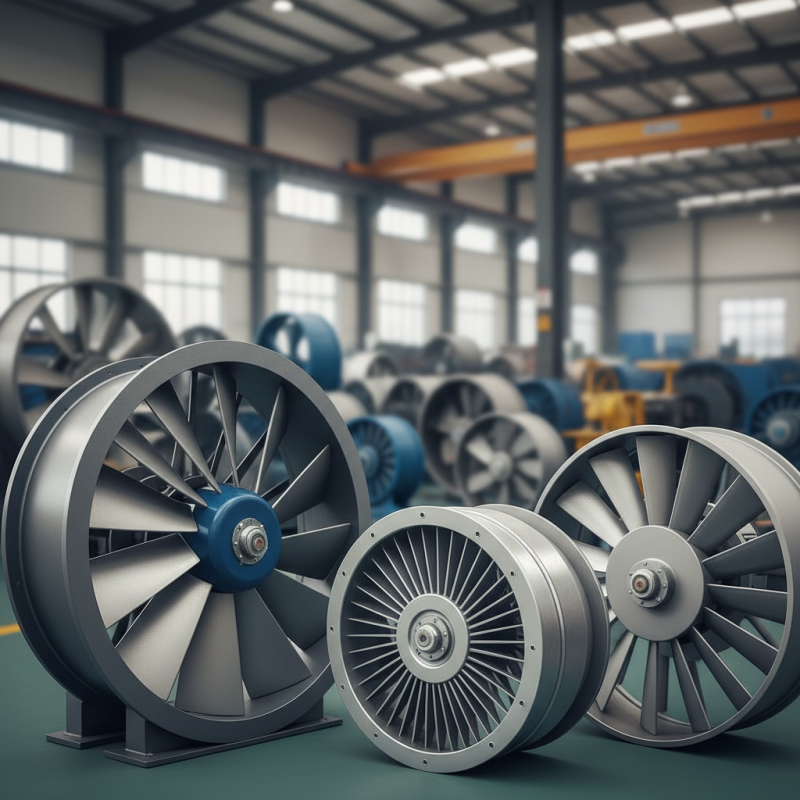
Centrifugal Fans Benefits Types and Uses for Global Buyers
Centrifugal Fans play a vital role in various industries. They are used to move air and gases efficiently. These fans are designed to generate a high static pressure. This feature makes them suitable for numerous applications.
Different types of centrifugal fans exist, each suited for specific tasks. For instance, backward-curved fans are excellent for high-volume air movement. Forward-curved fans, on the other hand, are ideal for low-pressure environments. Understanding these distinctions helps buyers make informed decisions.
Global buyers should consider both the performance and reliability of centrifugal fans. Selecting the right type can enhance energy efficiency. However, not all fans are created equal. Some may not perform well in demanding conditions. It's important to evaluate suppliers and their specifications carefully.
Benefits of Using Centrifugal Fans in Industrial Applications
Centrifugal fans play a crucial role in numerous industrial applications. They are designed to move air and other gases efficiently. One standout benefit is their high airflow capacity, which allows them to handle large volumes of air. This makes them suitable for ventilation in industrial buildings or production facilities. Additionally, centrifugal fans operate quietly compared to other types, enhancing workplace comfort.
These fans are versatile and come in various designs. They can be tailored to fit specific needs, with options for different blade shapes and sizes. Many industries utilize these fans for dust control, drying processes, and cooling systems. However, choosing the right fan can be challenging. Users must consider factors like pressure requirements and energy efficiency. Not every fan suits every application, and using the wrong type can lead to inefficiencies and higher operational costs.
Maintaining centrifugal fans is also essential. Regular checks can prevent breakdowns and ensure optimal performance. Many overlook this aspect, focusing solely on installation. Lack of maintenance can lead to reduced airflow or increased noise levels. Awareness of these needs is critical for maximizing the longevity and effectiveness of centrifugal fans in any industrial setting.
Different Types of Centrifugal Fans and Their Unique Features
Centrifugal fans come in various types, each designed for specific applications. These fans utilize a rotating impeller to increase air pressure and facilitate air movement. Understanding their unique features helps buyers select the right fan for their needs.
One common type is the backward-curved fan, which is efficient and well-suited for high airflow at low pressure. The design minimizes drag, enhancing performance and energy efficiency. However, users sometimes overlook the potential noise generated at high speeds. Radial blade fans, known for their robust construction, excel in handling dust-laden air. Their strength comes with a trade-off; maintenance can be challenging due to the build-up in the blades.
Another notable type is the forward-curved fan, ideal for low-pressure applications where a compact design is essential. While they offer quieter operations, their efficiency may decline under heavy loads. Buyers must consider the balance between size, efficiency, and expected noise levels. Ultimately, understanding these nuances aids in making informed decisions in the centrifugal fan market.
Centrifugal Fans Benefits, Types and Uses for Global Buyers
| Type of Centrifugal Fan | Unique Features | Applications | Benefits |
| Backward Curved Fan | Efficient airflow and low noise levels | HVAC systems, industrial ventilation | Energy-efficient and long-lasting |
| Forward Curved Fan | Compact design with high airflow at low speeds | Small cooling systems, electronics | Low initial cost and simple installation |
| Radial Fan | Operates at high pressure with moderate airflow | Dust collection systems, material handling | Versatile performance and robust construction |
| Mixed Flow Fan | Combines characteristics of centrifugal and axial fans | HVAC and air conditioning | Space-saving and efficient airflow |
| High-Pressure Fan | Designed for generating high pressure with moderate airflow | Chemical processing, pneumatic conveying | Reliable in demanding applications |
Applications of Centrifugal Fans Across Various Industries
Centrifugal fans are widely used in various industries due to their efficiency and versatility. These fans are commonly employed in ventilation systems, material handling, and cooling processes. According to a report by Market Research Future, the global centrifugal fan market is projected to reach $2.2 billion by 2026, driven by increasing industrialization and the demand for effective ventilation solutions.
In the manufacturing sector, centrifugal fans play a crucial role in dust and fume extraction. They help maintain air quality and ensure the safety of workers. For instance, the food processing industry relies on these fans for drying and cooling products. Furthermore, in the HVAC industry, centrifugal fans are integral to controlling airflow, which improves energy efficiency.
Despite their advantages, selecting the right fan can be challenging. Factors such as size, energy consumption, and noise levels must be considered. Some users may experience difficulties in balancing performance with energy efficiency. This suggests the need for detailed assessments and consultations before purchasing. Such reflections ensure that industrial applications leverage centrifugal fans optimally.
Efficiency Metrics: Comparing Centrifugal Fans with Other Fan Types
When comparing centrifugal fans to other fan types, efficiency is a crucial metric. Centrifugal fans are known for their high pressure capabilities. Studies show they can achieve static efficiencies of up to 75%. This efficiency comes from their design, which converts input energy into airflow effectively. In contrast, axial fans often have lower static efficiencies, generally around 60%.
Another important aspect is air volume. Centrifugal fans can handle larger volumes of air at higher pressures. This makes them suitable for industrial applications. A recent industry report indicates that centrifugal fans are often preferred in HVAC systems due to this capability. Yet, their complexity in design may lead to higher maintenance requirements.
Moreover, noise levels differ significantly across fan types. Centrifugal fans tend to operate more quietly compared to axial fans. However, this can be context-dependent. Some might argue that the initial investment in centrifugal fans is higher. Yet, their longevity and reduced energy consumption often offset these costs in the long run.
Centrifugal Fans Efficiency Comparison
Future Trends in Centrifugal Fan Technology and Market Growth Statistics
The growth of centrifugal fan technology is remarkable. Recent reports suggest that the global centrifugal fan market is set to reach $10 billion by 2025. This reflects a compound annual growth rate (CAGR) of 4.5%. Increased demand in various sectors drives this rapid expansion. Industries like HVAC, automotive, and manufacturing are major contributors to this growth.
Emerging trends include the rise of energy-efficient designs. Modern centrifugal fans focus on reducing energy consumption. Technologies like variable speed drives and advanced materials are becoming common. These innovations not only lower operational costs but also extend equipment lifespan. According to industry studies, energy savings can reach up to 25% in some applications.
However, some challenges persist in this evolving landscape. Manufacturers face issues like fluctuating raw material prices. This can impact product pricing and availability. Moreover, the need for continuous innovation pushes them to invest significantly in R&D. Balancing costs while improving technology remains a critical concern. Overall, the centrifugal fan market is poised for substantial growth, yet adaptability will be key to navigating future challenges.