

Our Blog
Check out our innovative pump solutions and industry insights to see what's new in the pumping industry. Stay up to date with the latest trends and news in the world of pumping technology by following our pumping technology blog.
- Home
- Blog
Top CNC Milling Machines for Global Buyers
Buying Cnc Milling Machines for a global workshop is not a simple catalog decision. A machine may look impressive online, yet perform poorly under real production pressure. Buyers must examine spindle speed, axis travel, rigidity, control systems, tooling compatibility, service access, and total ownership cost. A polished brochure cannot reveal every weakness.
John Saunders, founder of Saunders Machine Works and a respected CNC educator, captures the practical mindset clearly: “The best way to learn is to do.” That principle also matters when evaluating equipment. Reliable comparisons should combine factory specifications with hands-on evidence, including sample cuts, surface finish, cycle stability, and operator feedback. A machine cutting aluminum smoothly may struggle with hardened steel. Small details matter.
This guide reviews leading Cnc Milling Machines for international buyers, including compact mills, production models, and high-precision systems. It considers manufacturers with established support networks, documented quality procedures, and accessible replacement parts. Import requirements, voltage standards, software compatibility, and training availability also deserve attention. These factors can change the real purchase price quickly.
There is no perfect machine.
A lower-cost model may suit prototypes but disappoint during continuous production. A premium system may offer excellent accuracy but exceed a small workshop’s practical needs. We may overlook something; every buyer should verify current specifications with the manufacturer. The strongest choice is not always the largest or fastest machine. It is the one that matches material, workload, operator skill, floor space, and long-term service expectations.
CNC Milling Machine Basics and Core Operating Principles
CNC milling begins with controlled material removal. A spindle rotates the cutting tool while linear axes position it against the workpiece. The machine follows programmed coordinates, usually generated from CAD and CAM software. Each axis has a defined direction, origin, and travel limit. That reference matters.
The core cutting variables are spindle speed, feed rate, axial depth, and radial engagement. Operators balance them against tool diameter, material hardness, coolant, and machine rigidity. Excessive speed can burn the cutting edge. Excessive feed can cause chatter or breakage. Chatter sounds harsh. It is a warning, not a production target. The U.S. National Institute for Occupational Safety and Health stresses risk assessment and guarding around machining equipment, reinforcing that process control includes people, not only code.
Market growth also raises the need for reliable fundamentals. Grand View Research reported that the global CNC machine market was valued at approximately 83 billion U.S. dollars in 2023, with continued growth projected through 2030. The 2024 Fortune Business Insights report similarly estimated sustained expansion through 2032. These figures suggest wider adoption, but they do not guarantee good parts. A cheaper cycle can create more inspection, scrap, and tool replacement. Experienced buyers should examine positioning accuracy, thermal stability, workholding, controller functions, and service support. I would also question catalog cycle-time claims. Real production includes tool changes, probing, cleaning, and occasional mistakes. That is where planning often looks less perfect.
Key Machine Types for Different Production Requirements
Top CNC Milling Machines for Global Buyers
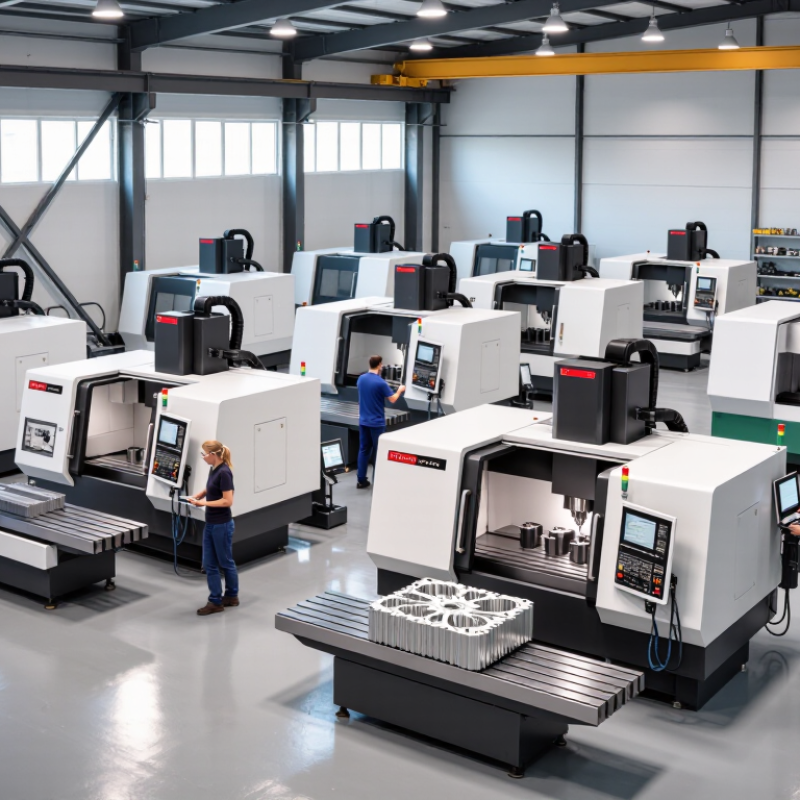
Choosing a CNC milling machine starts with the part, not the machine catalogue. Vertical machining centers suit general components, plates, molds, and maintenance work. Their open access simplifies setup and inspection. Three-axis models handle many jobs at a reasonable investment. They may struggle with deep angles and complex surfaces.
Horizontal machining centers support high-volume production with strong chip evacuation. They work well for housings, automotive components, and repeated pallet operations. A four-axis machine can reduce repositioning and improve consistency. Five-axis equipment reaches multiple faces in fewer setups. It fits aerospace parts, medical components, and complex impellers, but programming demands rise sharply.
Match spindle speed and torque to the material. Aluminum needs different cutting behavior from hardened steel or titanium. Check the working envelope carefully. A large table does not guarantee enough travel around fixtures. Production teams should also review tool capacity, coolant control, probing, and automation interfaces. These details affect real output more than impressive specifications. In practical evaluations, installation power, floor space, operator training, and local technical support often decide success. A perfect machine rarely exists. One overlooked limitation can create expensive delays. I have seen buyers prioritize speed, then discover that fixture changes consume most of the shift. Request sample cutting tests, service documents, electrical requirements, and accuracy data before purchase. Different regions may also require specific safety documentation and compatible power systems.
Top CNC Milling Machines for Global Buyers
Key machine types for different production requirements
The chart compares common CNC milling machine types by their typical number of controlled axes. Three-axis machines are widely used for standard prismatic parts, while four-axis and five-axis systems are better suited to indexed or simultaneous machining of complex components. Horizontal and gantry machining centers are commonly selected for high-volume production, large workpieces, or improved chip evacuation. Actual configurations vary by application, work envelope, tooling, and production volume.
Essential Specifications for Comparing Global CNC Mills
When comparing CNC milling machines, start with measurable capacity, not promotional claims. Record X, Y, and Z travel, table dimensions, maximum load, and tool envelope. A machine may advertise a large table, yet lose useful space after clamping a vise and rotary fixture.
Spindle Performance Spindle speed is only one part of performance. Check spindle power, torque at low rpm, taper size, acceleration, and thermal stability. A 12,000-rpm spindle cannot replace strong low-speed torque for cutting steel.
Accuracy Verification Positioning accuracy and repeatability should be verified through ISO 230-2 testing, preferably with documented results. Ask for cutting samples, not only certificates. Small differences become visible as burrs, poor holes, or uneven surface finishes.
Automation also changes the buying calculation. The International Federation of Robotics reported 541,302 industrial robots installed worldwide in 2023, showing stronger demand for connected production. Therefore, inspect the control system’s data access, remote diagnostics, probing support, and tool-management functions.
Energy deserves attention too. The International Energy Agency estimates motor-driven systems consume about 70% of industrial electricity. Compare spindle efficiency, standby consumption, coolant-pump power, and compressed-air demand. Check voltage, frequency, guarding, and local compliance requirements. Service response times matter. I would not choose the fastest machine automatically; reliability records and spare-part access may protect more production hours. Some specifications still look impressive but lack independent verification. That deserves skepticism.
Evaluating Accuracy, Materials, Automation, and Work Capacity
Choosing among top CNC milling machines for global buyers requires more than comparing spindle speed. Accuracy should remain stable during long runs, not only during a showroom test. Check repeatability, thermal compensation, and the quality of the linear guides. A tolerance of 0.01 mm can matter greatly when producing aluminum housings or precision fixtures. Ask for inspection records and sample-cut results. Numbers without evidence deserve caution.
Material choice also changes the machine’s demands. Aluminum needs efficient chip removal, while stainless steel requires rigidity, controlled cutting speed, and strong coolant flow. Hardened steel may require slower passes and specialized tooling. Automation can reduce handling errors through automatic tool changers, probing systems, and pallet exchange. However, automation adds maintenance points. A neglected sensor can stop production faster than a manual setup.
Work capacity must match real production plans. Measure table travel, spindle clearance, fixture space, and maximum workpiece weight. A large table is useful only when the spindle can reach its corners. Power supply, operator training, spare parts, and local technical support also affect reliability across regions. In practical evaluations, buyers sometimes overvalue speed and undervalue calibration routines. That is an expensive mistake. Even a capable machine may deliver inconsistent parts when floors vibrate, coolant temperature changes, or operators skip probing. Evaluate the complete working environment, not the machine alone.
Top CNC Milling Machines for Global Buyers - Evaluating Accuracy, Materials, Automation, and Work Capacity
| Machine Category | Typical Positioning Accuracy | Typical Repeatability | Common Work Envelope | Spindle Range | Suitable Materials | Automation Options | Typical Work Capacity | Best-Fit Applications |
|---|---|---|---|---|---|---|---|---|
| Benchtop 3-Axis CNC Mill | ±0.010–0.030 mm Suitable for light-duty precision work when properly calibrated. | ±0.005–0.015 mm | X: 300–600 mm Y: 150–350 mm Z: 200–350 mm | 6,000–24,000 rpm Typically 0.8–3.0 kW | Aluminum, brass, plastics, acrylic, wood, engineering wax, and light cuts in mild steel. | Manual tool changes; optional probing, coolant system, dust extraction, and basic job monitoring. | Parts generally below 300 mm in length and approximately 10–80 kg, depending on the table and fixture. | Education, prototypes, model making, electronics enclosures, small fixtures, and low-volume parts. |
| Compact 3-Axis Vertical Machining Center | ±0.005–0.015 mm | ±0.003–0.008 mm | X: 500–800 mm Y: 350–500 mm Z: 400–550 mm | 8,000–15,000 rpm Typically 5.5–15 kW | Aluminum alloys, steels, stainless steel, brass, copper alloys, plastics, and graphite with suitable tooling. | Automatic tool changer, probing, chip conveyor, mist or flood coolant, and optional fourth-axis rotary table. | Parts generally below 600 mm in length and approximately 250–600 kg. | General job-shop work, machine components, molds, brackets, pump parts, and maintenance production. |
| Production 3-Axis Vertical Machining Center | ±0.003–0.010 mm | ±0.002–0.005 mm | X: 800–1,500 mm Y: 500–700 mm Z: 500–700 mm | 6,000–12,000 rpm Typically 11–30 kW | Carbon steel, alloy steel, stainless steel, aluminum, titanium alloys, cast iron, and nickel-based alloys with appropriate tooling. | 20–40 tool positions, automatic tool measurement, work probing, pallet systems, chip management, and robotic loading. | Parts generally below 1,200 mm in length and approximately 600–2,000 kg. | Automotive components, industrial equipment, energy parts, mold bases, and medium-volume production. |
| 4-Axis CNC Machining Center | ±0.004–0.010 mm Rotary-axis accuracy depends on calibration, backlash control, and fixture setup. | ±0.002–0.006 mm | Linear axes commonly cover: X: 600–1,200 mm Y: 400–650 mm Z: 450–700 mm | 8,000–15,000 rpm Typically 7.5–22 kW | Aluminum, steel, stainless steel, cast iron, titanium, brass, and plastics. | Integrated rotary table, automatic tool changer, probing, pallet changer, bar or fixture automation, and multi-part tombstones. | Parts generally below 1,000 mm in length; rotary workpieces commonly range from 150–500 mm in diameter. | Parts requiring machining on multiple sides, housings, impellers, shafts, manifolds, and reduced re-fixturing. |
| 5-Axis Machining Center | ±0.003–0.008 mm Volumetric accuracy is affected by machine configuration, thermal conditions, and kinematic calibration. | ±0.002–0.005 mm | Typical linear travel: X: 500–1,000 mm Y: 400–700 mm Z: 400–700 mm | 10,000–24,000 rpm Typically 11–37 kW | Titanium, aluminum, hardened steels, stainless steel, nickel alloys, composites, graphite, and tool steels. | Automatic tool changer, tool and workpiece probing, pallet pool, robot loading, collision monitoring, and advanced post-processing. | Complex parts commonly below 800 mm in diameter or length; machine payloads often range from 300–1,500 kg. | Aerospace components, medical parts, turbine blades, complex molds, orthopedic components, and high-value low-volume work. |
| Heavy-Duty Bed-Type or Gantry Mill | ±0.010–0.030 mm Large-format accuracy depends strongly on foundation, thermal control, and machine alignment. | ±0.005–0.015 mm | X: 1,500–6,000+ mm Y: 800–2,500 mm Z: 600–1,500 mm | 3,000–10,000 rpm Typically 18.5–75 kW | Cast iron, carbon steel, alloy steel, stainless steel, aluminum, and large welded structures. | Automatic tool changer, angle heads, right-angle heads, probing, chip conveyors, rotary tables, and remote machine monitoring. | Workpieces commonly range from 1,000–6,000 mm in length and approximately 1–20 tonnes, depending on table design. | Large molds, construction machinery parts, energy equipment, aerospace structures, dies, and heavy industrial components. |
| High-Speed Graphite and Non-Ferrous Mill | ±0.003–0.010 mm | ±0.002–0.005 mm | X: 400–1,000 mm Y: 300–600 mm Z: 250–500 mm | 18,000–40,000 rpm Typically 5.5–22 kW | Graphite, aluminum, copper, brass, plastics, composites, and other non-ferrous materials. | Automatic tool changer, sealed enclosure, dry machining, vacuum extraction, probing, and tool-life monitoring. | Parts generally below 800 mm in length and approximately 100–800 kg. | Electrode production, mold inserts, precision aluminum parts, micro-features, and fine surface-finish work. |
Accuracy, repeatability, spindle performance, payload, and work envelope are typical specification ranges for commercially available CNC milling machine categories. Actual results vary with machine construction, controller, tooling, fixture rigidity, environmental temperature, material, cutting parameters, and calibration standard.
Purchasing Considerations for International CNC Buyers
Top CNC Milling Machines for Global Buyers
International buyers should judge a CNC milling machine beyond spindle speed and advertised accuracy. Grand View Research valued the global CNC machine market at approximately USD 83 billion in 2022. That scale signals strong demand, but it also creates confusing specifications.
Request test-cut results, not only catalog figures. Ask whether accuracy and repeatability follow ISO 230-2 procedures. Small differences can become visible on a 500-millimeter aluminum component.
Purchasing conditions vary sharply between countries. Confirm voltage, frequency, phase requirements, metric or imperial programming, and local safety documentation. A machine designed for one electrical system may need costly modifications overseas.
Check the full landed cost, including crating, insurance, customs clearance, installation, training, and spare parts. The World Bank’s 2023 Logistics Performance Index showed wide gaps in international delivery performance. Plan for delays. Production schedules rarely forgive optimistic shipping assumptions.
Service capability deserves equal attention. Request response-time commitments, remote diagnostics, technician availability, and a clear warranty process. The International Federation of Robotics reported more than 4 million industrial robots operating worldwide in 2022, showing how quickly automated production is expanding.
Yet automation does not guarantee profitable output. A cheaper machine may consume more energy, need longer setup, or lack suitable post-processing support. I would challenge my own first quotation here.
The lowest purchase price can be the wrong number. Ask for three-year operating costs and a sample maintenance schedule before approving the order.